
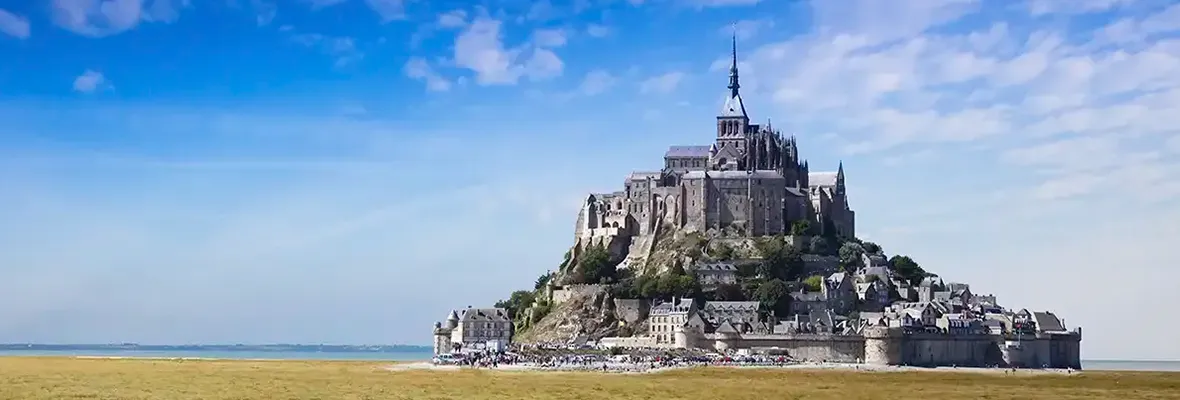
Rising like a mirage from Normandy’s tidal flats, Mont-Saint-Michel is where French history, medieval faith and raw Atlantic nature meet. This guide shares smart timing, tide basics, and the one thing most day-trippers miss—staying overnight.
Want it woven into a seamless day with a private driver-guide? Explore our Normandy itineraries.
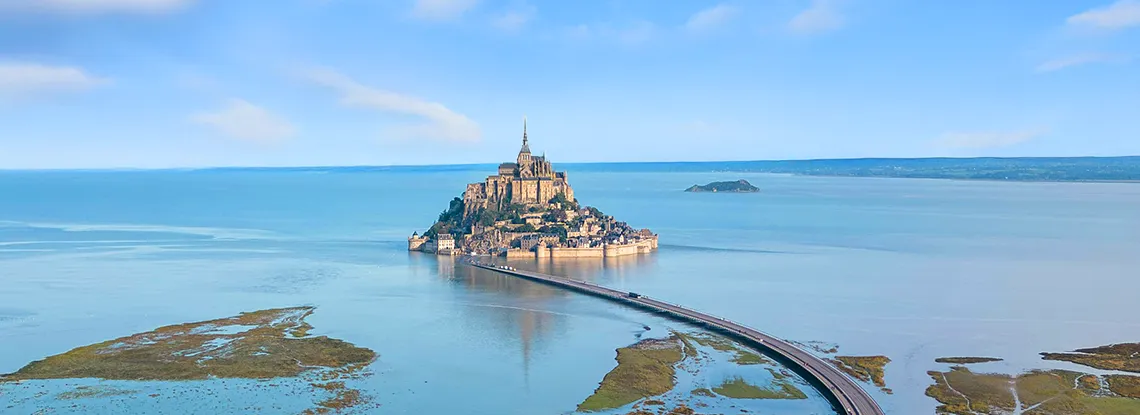
Jump to: History & legend • The abbey • Tides & bay • Village life • Plan your visit • Getting there • Guided bay walk • When to visit • FAQ
Mont-Saint-Michel at a glance
In 708, the Archangel Michael is said to have appeared to Bishop Aubert of Avranches, urging a sanctuary on this rocky mount. When Aubert hesitated, legend says the archangel pressed a finger into his skull—today a relic in Avranches bears the mark.
Through the Middle Ages the site grew into a scholarly Benedictine abbey, later a near-impregnable stronghold during the Hundred Years’ War, and after the Revolution a prison grimly nicknamed the “Bastille of the Seas.” In the 19th–20th centuries, restoration returned its splendor.
Beaurouge tip: many visitors try to “do it from Paris” in a single day. It’s doable—but you’ll miss the magic: blue-hour ramparts, empty lanes after the last shuttle, the bells at dawn. Stay the night.
Inside the abbey: the “Wonder of the West”
Vertical Gothic piled on Romanesque roots: refectory, cloister, vast halls suspended over rock. The spire, added in the 19th century, lifts Saint Michael above the bay. Audio tours are clear; a private guide adds deeper context about monastic life, sieges and restoration.
Timing matters: a late-afternoon entry is often ideal, then step onto the ramparts for sunset over the causeway and the mirror-like sands.
Tides & the living bay
The strongest tidal range in continental Europe reshapes the scene twice daily. On “great tide” days, water rushes back so fast locals say it comes “like a galloping horse.” At low tide, the Mont sits amid endless sands; at high tide, it becomes a true island.
Photographers should plan for two moods: one low-tide perspective with immense sands and one high-tide moment when water restores the island illusion. We align your abbey slot and dinner with the tide table.
Safety note: don’t attempt a bay crossing without a licensed guide—there’s quicksand, hidden channels, and a fast tide turn. We book English-speaking naturalist guides and handle the shuttle timing.
Village life after dark
Daytime can feel busy; night belongs to you. Lantern-lit alleys, gulls over the ramparts, the abbey bells above. Classic tastes include pré-salé lamb and Cancale oysters; the famous Mère Poulard omelette is a fun, foamy throwback.
Stay on the rock for the after-hours hush, or at selected bay-view hotels on the mainland for easier bags and parking—we arrange porterage.
Beaurouge tip: book dinner at golden hour facing the bay, then walk back on the ramparts as the lights come on.
Plan your visit
Best pacing: arrive mid-afternoon → check tides → sunset ramparts → overnight → early abbey visit → bay walk (optional) → lunch with view.
Tickets: pre-book abbey entry; slots can sell out on great-tide weekends and summer dates.
Footwear: for bay walks bring shorts, quick-dry layers and a light windbreaker; you may wade ankle-to-knee.
Dinner ideas: lamb pré-salé, oysters, buckwheat galettes. We secure sunset tables and manage shuttle timing.
Accessibility: the mount is steep with many stairs; we can adapt pacing, add breaks, or opt for bay-view dining without the full climb.
Getting there
From Paris: roughly 3h30–4h by road depending on traffic. Public transit is possible with train and bus combinations via Rennes or Pontorson, but adds transfers and time. With Beaurouge, a driver-guide handles door-to-door logistics, luggage and scenic stops.
Parking & shuttles: park on the mainland, then use the frequent free shuttles or enjoy the scenic 30–40 minute walk along the causeway.
Guided bay walk: the unforgettable add-on
Barefoot across rippled sands, learning about quicksand, channels and migrating dunes—while the abbey floats on the horizon. Choose 2–3 hour loops for families, or 4–5 hour traverses for active travelers. Departure times depend entirely on the tide table.
We book licensed English-speaking guides, check conditions, and set expectations clearly—including warm drinks after if the air is brisk.
Heads-up: do not step onto the sands without a guide—the tide turn is fast and channels are deceptive.
When to visit
May–June and September–October usually offer softer light and fewer crowds. Winter can be moody and magical; summer brings long evenings but requires earlier booking. We plan around great-tide dates for the most dramatic island effect.
See Mont-Saint-Michel with Beaurouge
We choreograph timing with the tides, secure dinner at golden hour, and pair the abbey with bay towns or oysters—in a day balanced to you.
Mont-Saint-Michel — FAQ
Yes, but it makes for a long day, often around 10–13 hours door-to-door. Staying overnight unlocks empty lanes, sunset ramparts and a calmer abbey visit.
On high tides—especially great-tide days. We check the calendar and align your visit for a true water “island moment.”
No. Always hire a licensed guide because of quicksand and fast-turning channels.
Quick-dry layers, shorts and a light windbreaker are ideal. Expect ankle-to-knee water and wind even in summer.
Ready to plan? Browse our Normandy tours or contact us via Contact.