
Normandy is more than D-Day. Between tidal miracles, chalk cliffs, Impressionist light and orchard-scented lanes, this region rewards travelers who slow down. Our team connects these highlights into fluid, crowd-smart days with private drivers and guide-storytellers—so you feel the place, not the logistics.
Browse the 7 experiences we return to again and again—or ask us to weave them into a tailor-made Normandy itinerary.
Jump to: Mont-Saint-Michel • Giverny & Monet’s Gardens • Honfleur • Airborne Museum • Juno Beach Centre • Étretat & the Alabaster Coast • Normandy Terroir • When to visit • FAQ
1. Mont-Saint-Michel
Iconic and otherworldly, the abbey-island rises from a bay with some of continental Europe’s highest tides. On certain “supertides,” the sea races back and the Mont becomes a true island for a few luminous hours—best seen from the 2014 causeway at golden hour.
True anecdote: in 708, the archangel Saint Michael is said to have appeared to Bishop Aubert of Avranches. After two ignored visions, the archangel pressed a finger to Aubert’s skull—leaving a small hole. The relic traditionally identified as Aubert’s skull is displayed in Avranches today.
Another chapter: after the Revolution the abbey became a prison—nicknamed the “Bastille of the Seas”—through which some 14,000 prisoners passed before restoration began in the 19th century.
Beaurouge tip: check tide calendars; aim for late afternoon into evening; we’ll handle shuttles, abbey tickets, and a bay-view dinner with pré-salé lamb or oysters.
2. Giverny & Monet’s Gardens
The master of light designed living canvases here: the Clos-Normand explodes with color; across the road, the water garden mirrors skies and weeping willows. Water lilies bloom deep into summer; the palette shifts with the seasons—exactly what Monet wanted you to notice.
Good to know: the gardens were restored and opened to the public in 1980; today a dedicated team tends them with an almost painterly rigor. Arrive for opening time or after 16:00 for calmer paths and cleaner bridge shots.
Pair Giverny with lunch in Vernon and an Orangerie visit in Paris another day—seeing the Nymphéas after the pond is a quiet thrill.
3. Honfleur & the Côte de Grâce
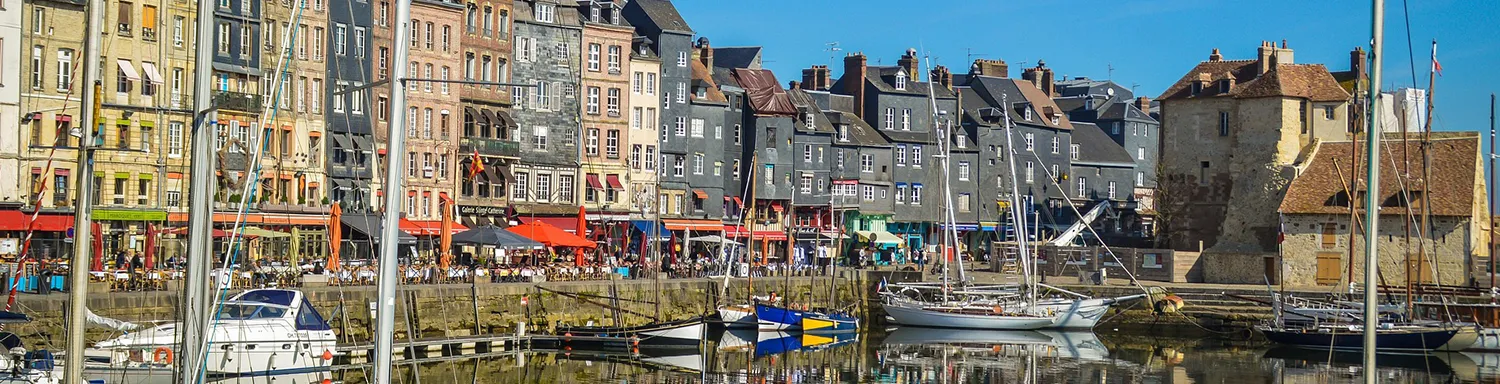
Slate roofs, a snug harbor, and a sky that made painters fall in love. Eugène Boudin—born here—mentored a young Monet to paint outdoors. Follow their footsteps up to Ferme Saint-Siméon or linger at the Eugène-Boudin Museum before a seafood lunch by the Vieux-Bassin.
Beaurouge tip: sunrise around the harbor for mirror-still reflections; late light from the Côte de Grâce for panoramic views toward the estuary.
4. Airborne Museum, Sainte-Mère-Église
In the first town liberated by U.S. paratroopers, this museum places you among the 82nd and 101st Airborne. Across the square, the church remembers John Steele—his parachute snagged on the steeple in the night of June 5–6, 1944.
Exhibits mix personal stories, a C-47, and immersive scenography. We time visits early—quietly powerful before the day’s bustle—and add Utah Beach or the La Fière causeway.
Beaurouge tip: pair with a simple farm lunch in the bocage; your guide-driver handles backroads and cemetery stops on request.
5. Juno Beach Centre (Courseulles-sur-Mer)
Canada’s D-Day story—told by a purpose-built museum whose titanium-clad, maple-leaf plan faces the dunes. Outside, bunkers from Strongpoint 31 anchor guided walks led by Canadian student-guides; inside, exhibitions bridge wartime sacrifice and present-day Canada.
Beaurouge tip: combine Juno with Bayeux’s tapestry or Arromanches’ Mulberry harbors for a balanced, family-friendly day.
6. Étretat & the Alabaster Coast
White-chalk cliffs, natural arches, and the famous “Needle” (l’Aiguille). Painters chased the changing light here; walkers follow cliff paths from the chapel to sweeping viewpoints. Sunset turns the sea to hammered silver.
Beaurouge tip: do one headland on foot and see the other by boat—two perspectives, zero rush. We add a table in town for mussels or a crêpe stop.
7. Normandy Terroir: cider, Camembert, oysters & Calvados
Taste Normandy’s “four Cs”: Camembert made traditionally from raw milk, cider from Pays d’Auge orchards, briny oysters and scallops, and Calvados—apple and pear brandy aged in oak, with distinct AOC appellations.
Beaurouge tip: we string tastings along hedge-lined lanes: a family cidery, an affineur for AOP cheeses, then sunset oysters on the coast.
When to Visit & How to Combine
For softer light and fewer visitors, we like May–June and September–October. We’ll plan around tide charts for Mont-Saint-Michel, market days, and realistic driving times.
Favorite combos: Mont-Saint-Michel with Cancale oysters; Giverny with Vernon lunch; Honfleur with Étretat; Airborne Museum with Utah Beach; Juno with Bayeux Tapestry. Tell us what you love—history, easy walks, food—and we’ll pace the day around that.
Discover Normandy with Beaurouge
From tidal marvels to orchard roads, these experiences pair beautifully—morning awe, golden-hour views, and flavors in between. We design door-to-door days with licensed guides and trusted drivers so you can simply enjoy the moments.
Normandy — FAQ
May–June and September–October usually offer long days, softer light and easier logistics. For Mont-Saint-Michel, check the great-tides calendar.
Two major sites plus one gentler stop often works best—such as Airborne Museum + Utah Beach + cider farm, or Giverny + Vernon + Seine backroads.
Distances add up and rural public transport can be patchy. With Beaurouge, a driver-guide makes timing, parking and scenic backroads much easier.
It’s possible, but rushed. We usually recommend Mont-Saint-Michel and bay towns one day, then WWII sites another, for better depth and breathing room.
Ready to plan? Browse our Normandy tours or contact us via Contact.