
Most cruise itineraries list Toulon as a port call. Very few tell you what to do once you're there. Toulon is not Nice, not Aix, not the Riviera you think you know — and that is precisely its value. This guide is written for travelers who arrive with a full day and want to use it well: the old town, the coast, the mountain, the table, and the museums that nobody outside the city knows about.
Toulon also works as a base for some of the most rewarding day trips in Provence — Évenos, Sanary, Le Castellet, Bandol wine country. Planning a longer stay in the Var? Explore our Provence itineraries.
Jump to: The honest answer • Two thousand years of history • The city today • Old town & market • The anses de Cap Brun • Mont Faron • The museums • Where to eat • A full day in Toulon • Beyond Toulon
Yes — but not for the reasons you expect
Toulon rarely makes it onto the French Riviera highlight reel. It's not Nice. It's not Aix. It has no iconic landmark that fits neatly onto a postcard. And yet, travelers who give it a full day — rather than a hurried hour at the port — tend to leave with the same observation: this felt like the real South of France.
That's exactly the point. Toulon is a working city with one of the most beautiful natural harbors in the Mediterranean. It has a vibrant market, an art museum that deserves more attention than it gets, a rugged coastline you can reach by car in minutes, and a table culture that punches well above its reputation. What it doesn't have is the tourist infrastructure that smooths everything into a performance of Provence. Which, depending on who you are, is either its flaw or its finest quality.
Toulon is also one of the few large Mediterranean cities where you repeatedly lose your sense of being in a city at all. On the mountain, in the inlets of Cap Brun, at the market — the question keeps coming up: where exactly are we?
That disorientation is not a bug. It's the whole point.
A city that has always been at the center of things
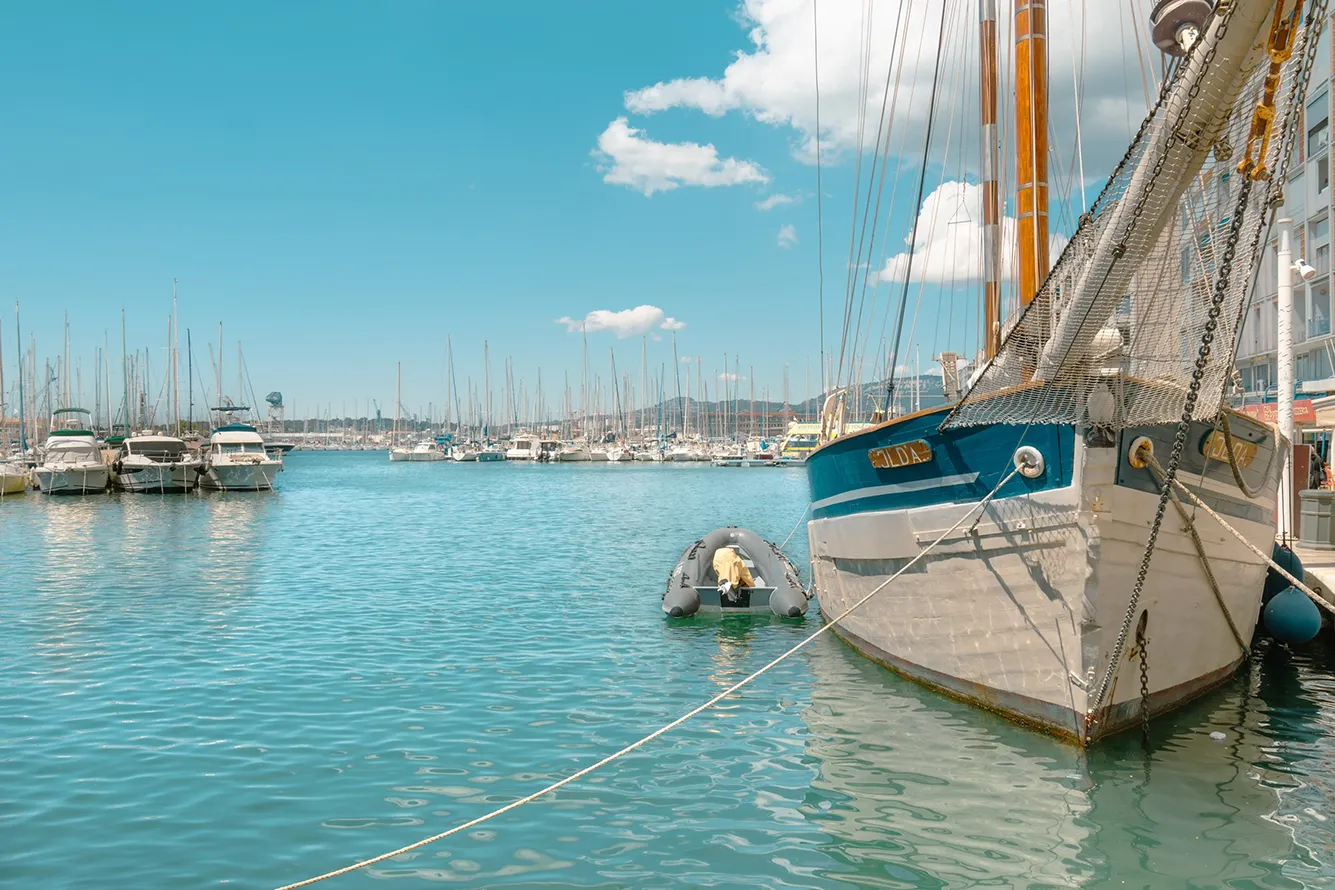
To understand Toulon, you need to understand what it has always been: a military city, built around one of the great natural harbors of the Mediterranean. The rade de Toulon — deep, sheltered, facing south — made it strategically indispensable to anyone who wanted to control the western Mediterranean. The Romans settled here first. Then came centuries of fortification, siege, and reinvention.
The city has seen more history than it is usually given credit for. In 1543, the Ottoman fleet of Barbarossa — allied with François I against Charles V — overwintered in the harbor, leaving behind traces of a cultural encounter that still surprises historians. In 1793, a young artillery officer named Napoleon Bonaparte distinguished himself during the siege that drove the British from the port, launching a career that would reshape Europe. The hills above the city are still punctuated by forts from these centuries of conflict — some abandoned, some crumbling, lending a quietly literary atmosphere to the Faron landscape that no designer could have planned.
The 20th century brought a different kind of violence. In November 1942, as German forces moved to occupy the Free Zone, the French Navy scuttled its own fleet in the harbor rather than allow it to fall into enemy hands. The port and much of the waterfront were subsequently destroyed by Allied bombing before the Provence landings of August 1944 — a campaign that liberated the south of France in ten days and is almost entirely unknown to American visitors who know Normandy well.
What rose from those ruins is itself worth looking at. The architect Jean de Mailly was commissioned to rebuild the waterfront in the early 1950s, and what he produced — four long horizontal blocks along the Quai de Cronstadt, their south facades animated by loggias and colored shutters in greens, yellows and blues, a rhythm of concrete and stone that reads as something between Miami and Mondrian — was controversial enough to be nicknamed "la Muraille de Chine" by its critics, and celebrated in the international architectural press as a model of modern reconstruction. The ensemble has since received a heritage label for remarkable contemporary architecture. Walk the quai and look at it properly: it is one of the more underrated pieces of postwar urbanism in France.
A reinvention still in progress — and all the better for it
For decades after the war, Toulon carried the weight of its military identity. A port city lives on a different rhythm than a tourist city — sailors, dockyards, a certain roughness in the center that kept visitors at a distance. As recently as the 1990s, the reputation held.
What has happened since is a quiet, determined transformation. The military presence hasn't disappeared — France's principal naval base remains here, one of the largest in Europe — but it has become largely invisible to civilian life. The personnel have their own zones, their own rhythms. When you walk the old town today, you don't see it.
What you see instead is a center that has been intelligently restored without being sanitized. Streets that were derelict twenty years ago now hold serious restaurants, wine bars, and cultural spaces. The Galerie Metaxu presents sharply curated contemporary exhibitions. The Maison de la Photo brings serious photography programming to the center. The Ancien Évêché — the former bishop's palace near the Cours Lafayette — has hosted the Villa Noailles' Design Parade, one of the most interesting design events in the south, and is set to become a Mama Shelter hotel by 2028: a sign of a city still mid-transformation, still finding its new identity without having lost its old one.
Toulon has also preserved entire neighborhoods that other cities would have demolished. The Mourillon district to the east — its 19th and early 20th-century villas climbing the hillside above the sea — is one of the more quietly beautiful urban coastlines in the south of France.
Below, the Mourillon beaches are what city beaches are almost never allowed to be: long, sandy, crystal-clear water, backed by restaurants that charge reasonable prices for genuinely good food.
One more thing worth knowing: Toulon operates a network of small municipal ferries connecting the port to La Seyne-sur-Mer and Saint-Mandrier for around €2. It is, in effect, a harbor cruise at a local price.
The old town & the Cours Lafayette market
The old town — le Vieux-Toulon — asks to be walked without a plan. Its grid of narrow streets holds good boulangeries, serious wine caves, and the kind of squares where locals actually sit rather than pose. The architectural scale is human. Nothing is monumental. That's what makes it pleasant rather than exhausting.
If you arrive on a market morning, head directly to the Cours Lafayette. This is not the kind of market that has been refined for visitors. There are no artisanal candles, no English-language signs. What there is: fishermen selling what came in that morning, vegetables at prices that feel like a misprint compared to Paris, olive vendors with thirty varieties in plastic tubs, cheese stalls where the vendor knows every wheel by name. The colors are the first thing — the oranges, the deep reds of the tomatoes in season, the abundance of green. It hits before the smell does. This is where real Toulonnais do their weekly shopping, and the social texture of the place — the conversations, the arguments over change, the slow pace despite the apparent busyness — is itself worth experiencing.
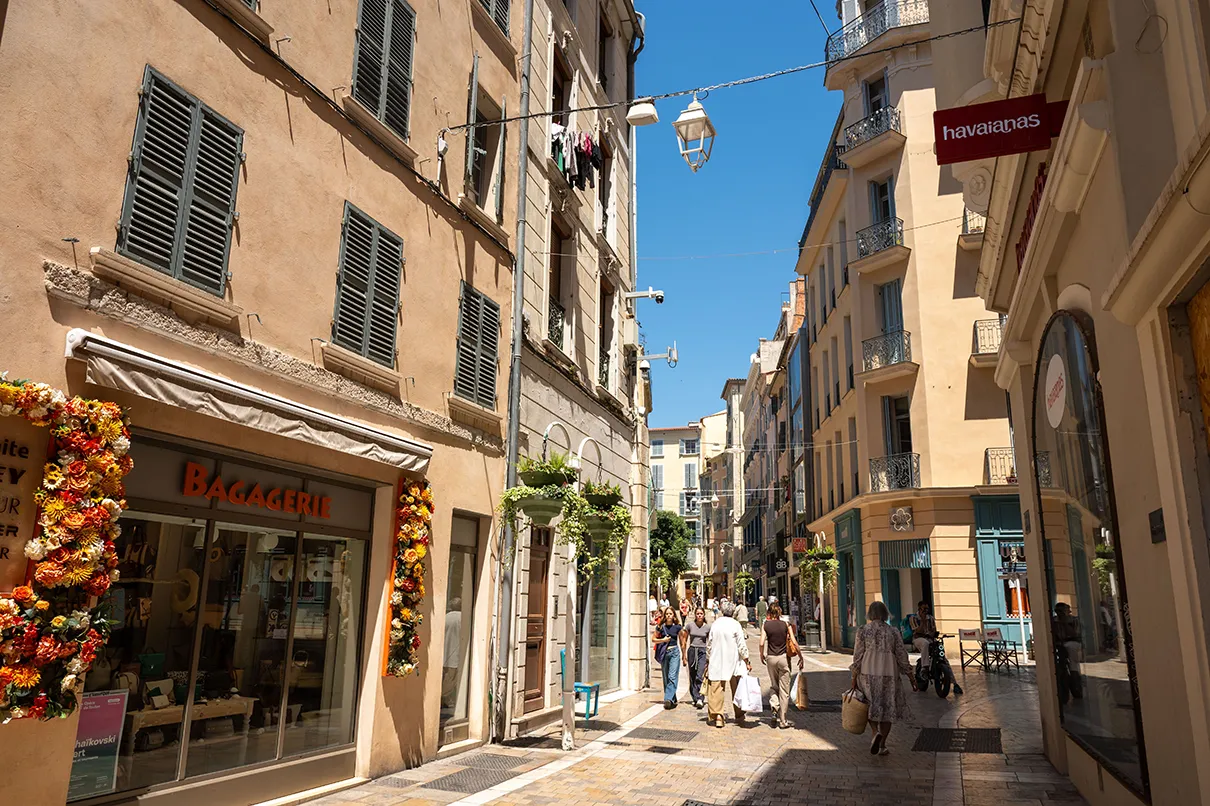
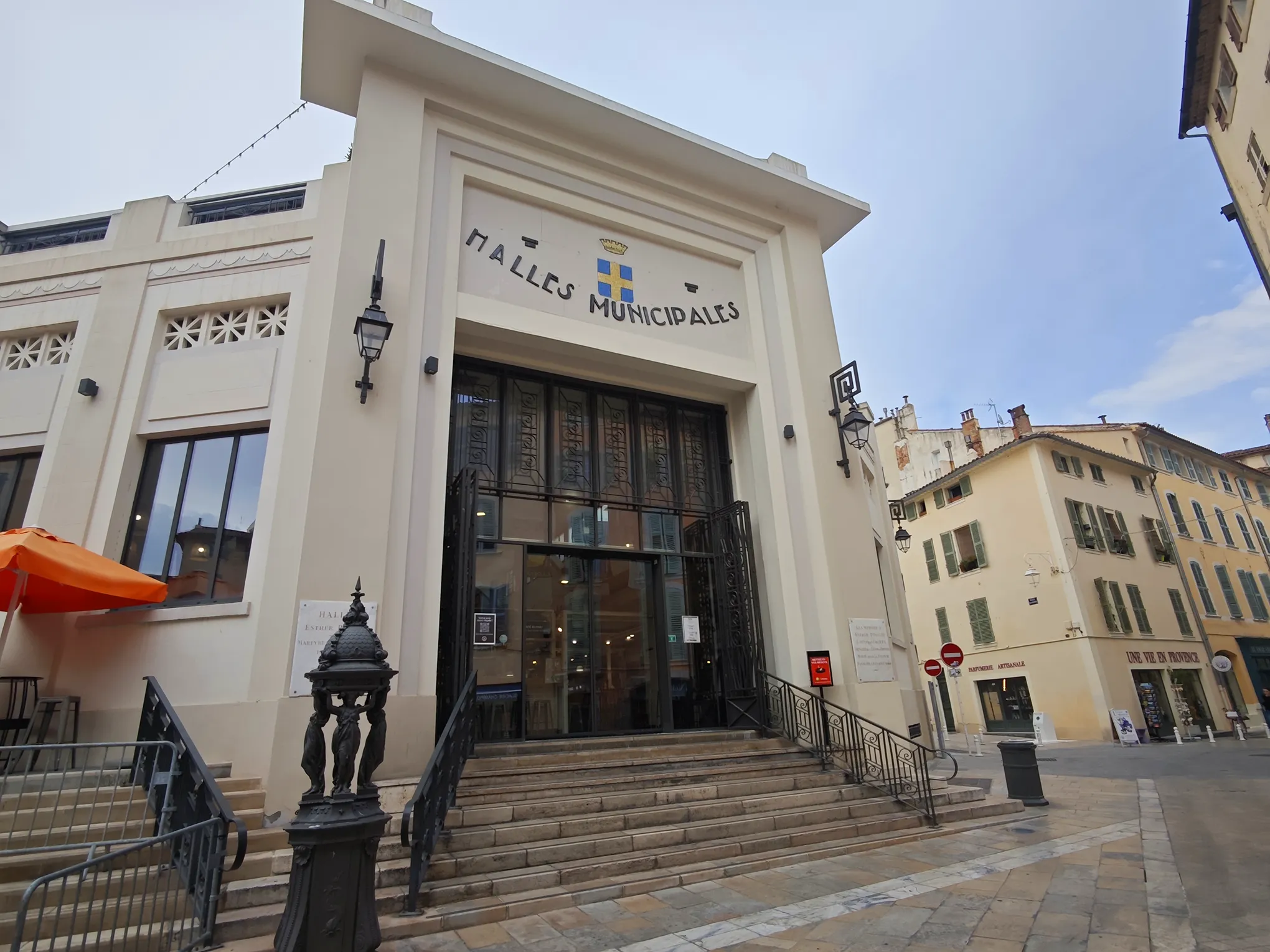
A few steps from the market, the Ancien Évêché deserves a pause. The building has hosted the Villa Noailles' Design Parade, one of the most compelling design events in the south of France, and it sits in an architectural conversation with the surrounding streets that rewards attention. Note it now; it will look different when the Mama Shelter opens in 2028.
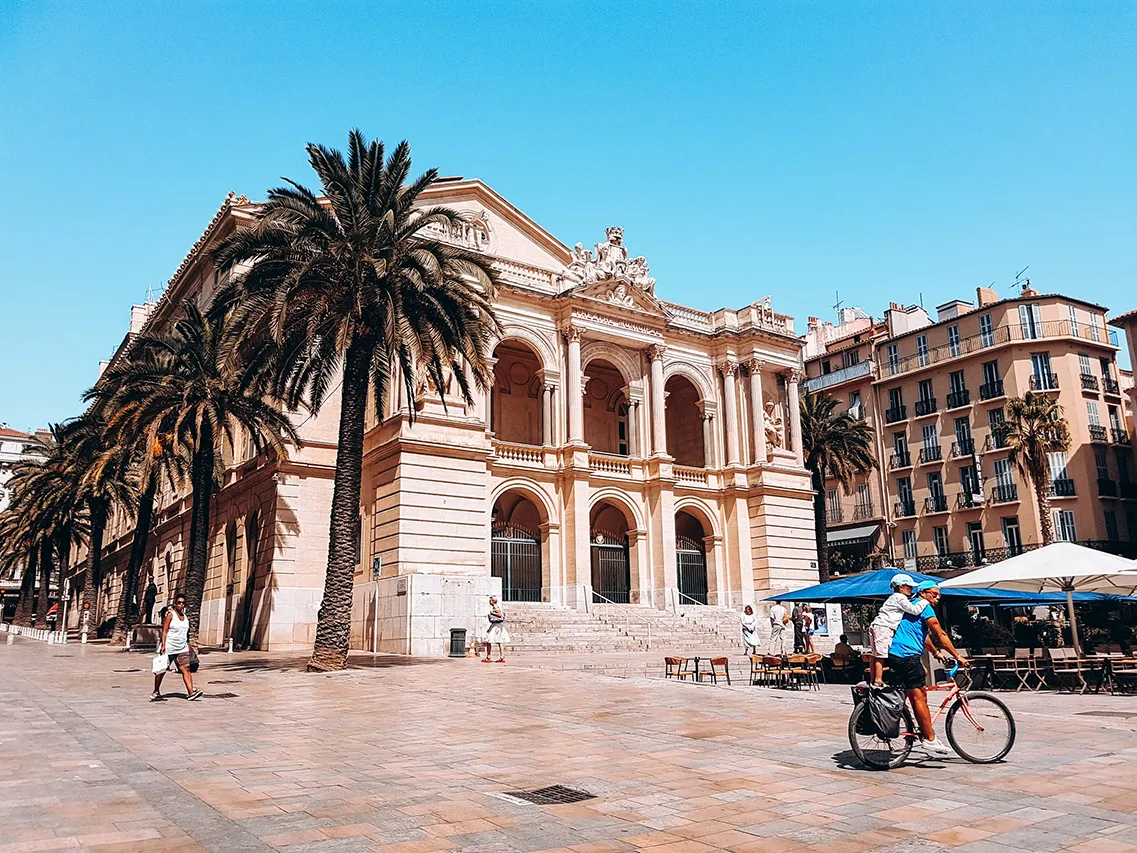
From the Cours, it's a short walk to the Place de la Liberté and the squares near the opera house — a 19th-century gem that's easy to miss if you don't know to look for it.
The anses de Méjean & Magaud: where you forget you're in a city
Toulon has a way of making you forget you're in a city. It happens several times during a day here — at the market, on the mountain, in the old streets — but nowhere more completely than at the Anses de Méjean and Magaud, two small inlets tucked into Cap Brun, the city's most quietly affluent neighborhood.
You can reach them by car in minutes from the center, or on foot from the Mourillon beach — a long walk, but one of those that justifies itself entirely. The path takes you along a coastline that feels closer to a Greek island or an Italian fishing village than to any French city you've visited. The question keeps coming up: where exactly are we?
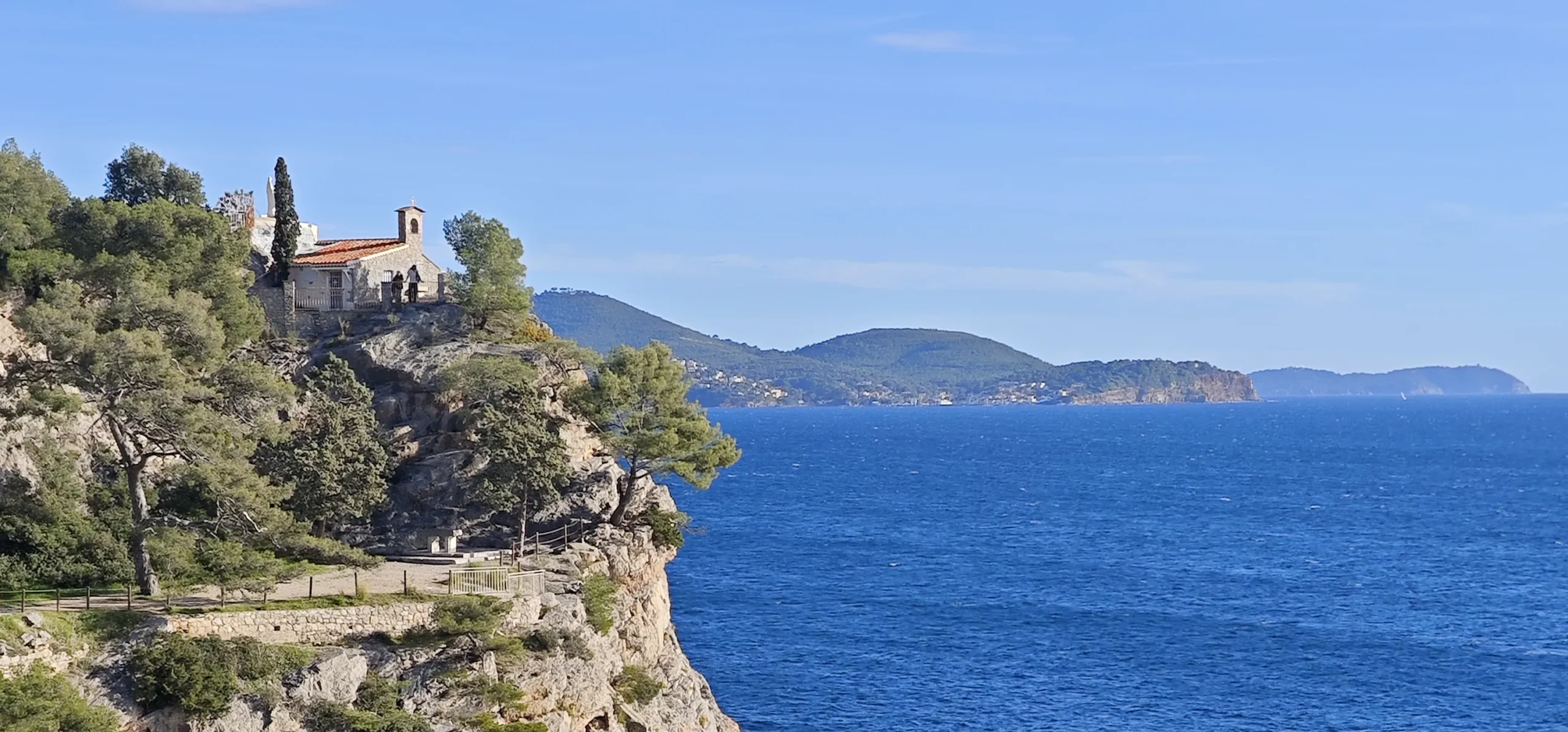
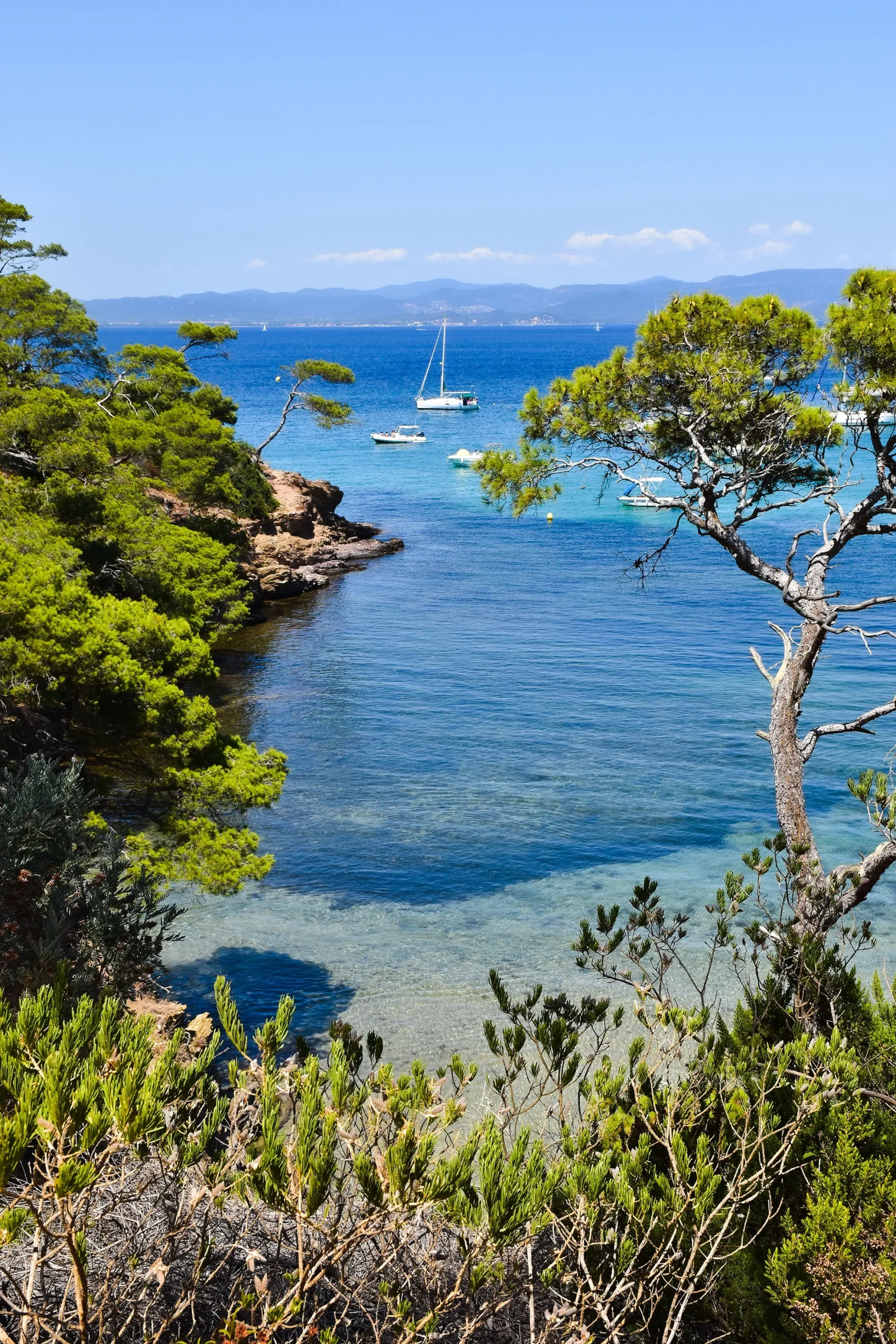
At the Anse Méjean, the answer doesn't come easily. Local families come here to swim — the water is crystal clear, the entry gentle, the atmosphere relaxed in the way that only places not yet discovered by tourism can be. In the distance you can make out the Presqu'île de Giens, Porquerolles, the Pradet coastline, and the peninsula of Saint-Mandrier across the water. The cabanons — traditional fishing shelters in the faded colors that no designer would ever choose intentionally — line the shore in a way that hasn't changed in decades.
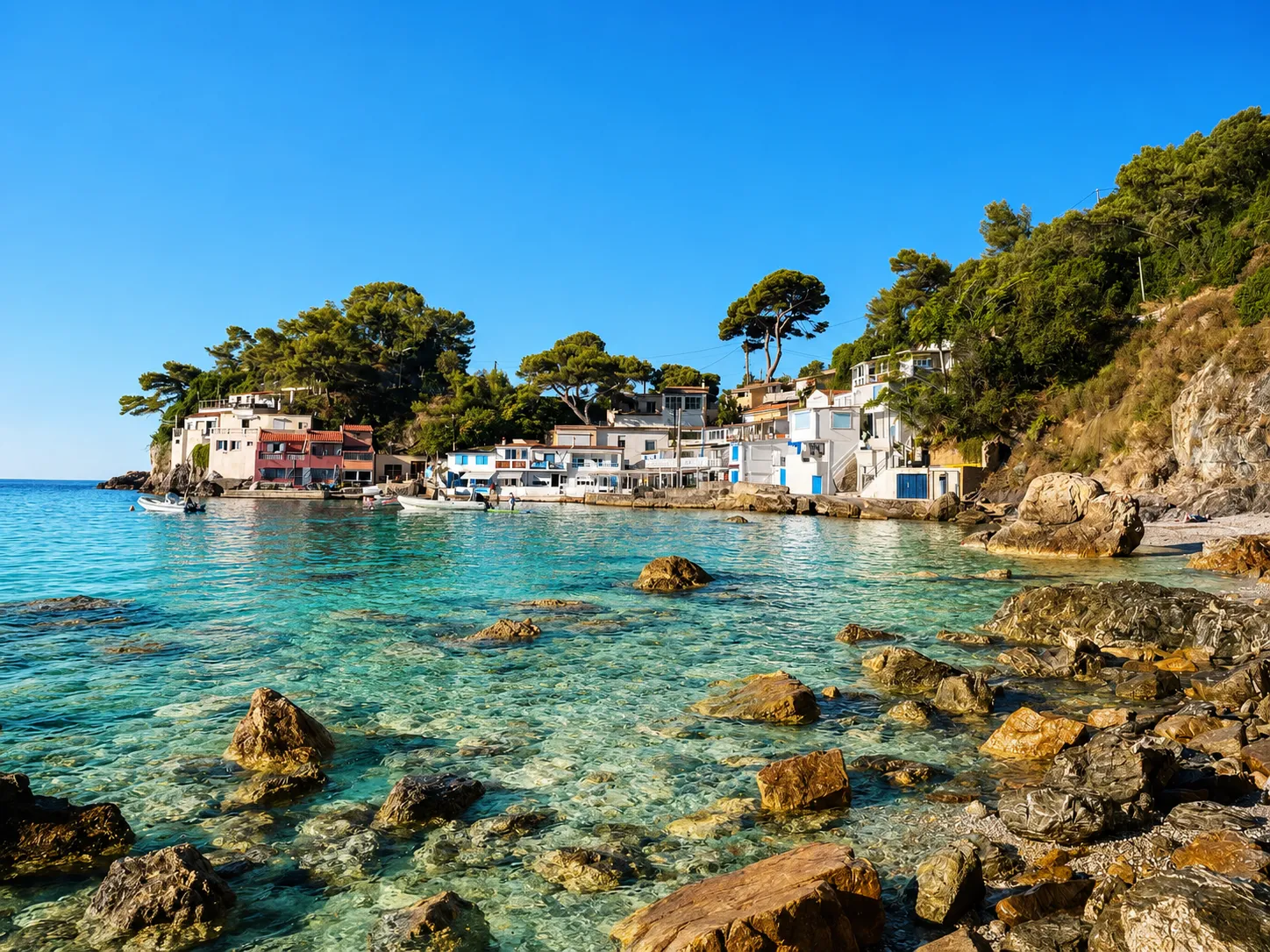
Just above the water, the small Chapelle Notre-Dame du Falcon sits at the edge of the cliff, overlooking the sea with the quiet intensity that religious buildings in Mediterranean landscapes always seem to carry. It's easy to miss if you don't look up.
For a drink or a simple meal after swimming, L'Escale on the Sentier des Douaniers is exactly what it should be: informal, unhurried, with the water close enough to hear.
Mont Faron: disorientation as a form of pleasure
The téléphérique gives you Toulon's secret slowly. As the cable car rises — it has been making this ascent since 1934 — the city recedes, and what replaces it is something you weren't prepared for: a real massif, a Mediterranean mountain, right behind a naval port. The harbor widens below, the coastline extends in both directions, and somewhere around the midpoint of the ascent the geography of the place finally makes sense in a way it couldn't from the streets. Check operating hours before you go; the téléphérique has a history of closures for maintenance and departures are spaced out.
That said — and this is a local preference worth sharing — the road up is the better experience if you have a car. Not because the view is superior, but because the stops are. The Pointe de Valbourdin in particular offers one of those panoramas that produces silence in people who were talking a minute before. From there, depending on the season, you can see the Revest valley, the Baou des Quatre Vents, the Mont Caume, and in winter the snow-capped peaks of the pre-Alps in the distance. The abandoned military forts along the route add an atmosphere that is hard to name — part wilderness, part history, entirely unexpected.
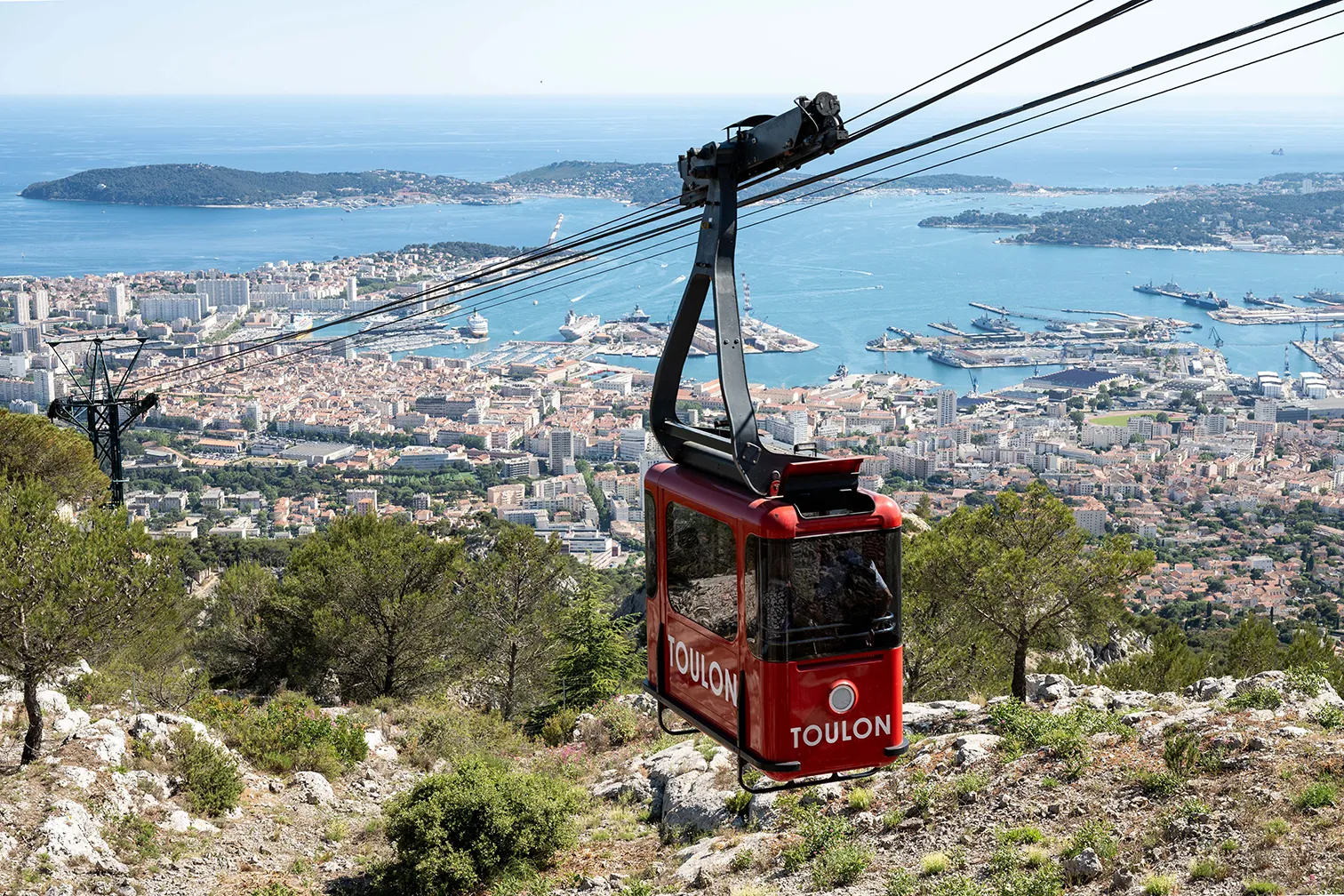
At the summit, the effect is the same question that Cap Brun asked an hour earlier: where are we? The plateau feels nothing like a city. On a clear day, Hyères and its islands appear to the east. The Mémorial du Débarquement is two minutes from the car park and documents the Allied landings of August 1944 with the seriousness the subject deserves — for American visitors, it offers context for a chapter of the war that very few arrive knowing.
Coming down by the road route, you are taken along a different face of the mountain before the city reassembles itself below you. You re-enter it slightly changed.
Two museums, both free, both worth your time
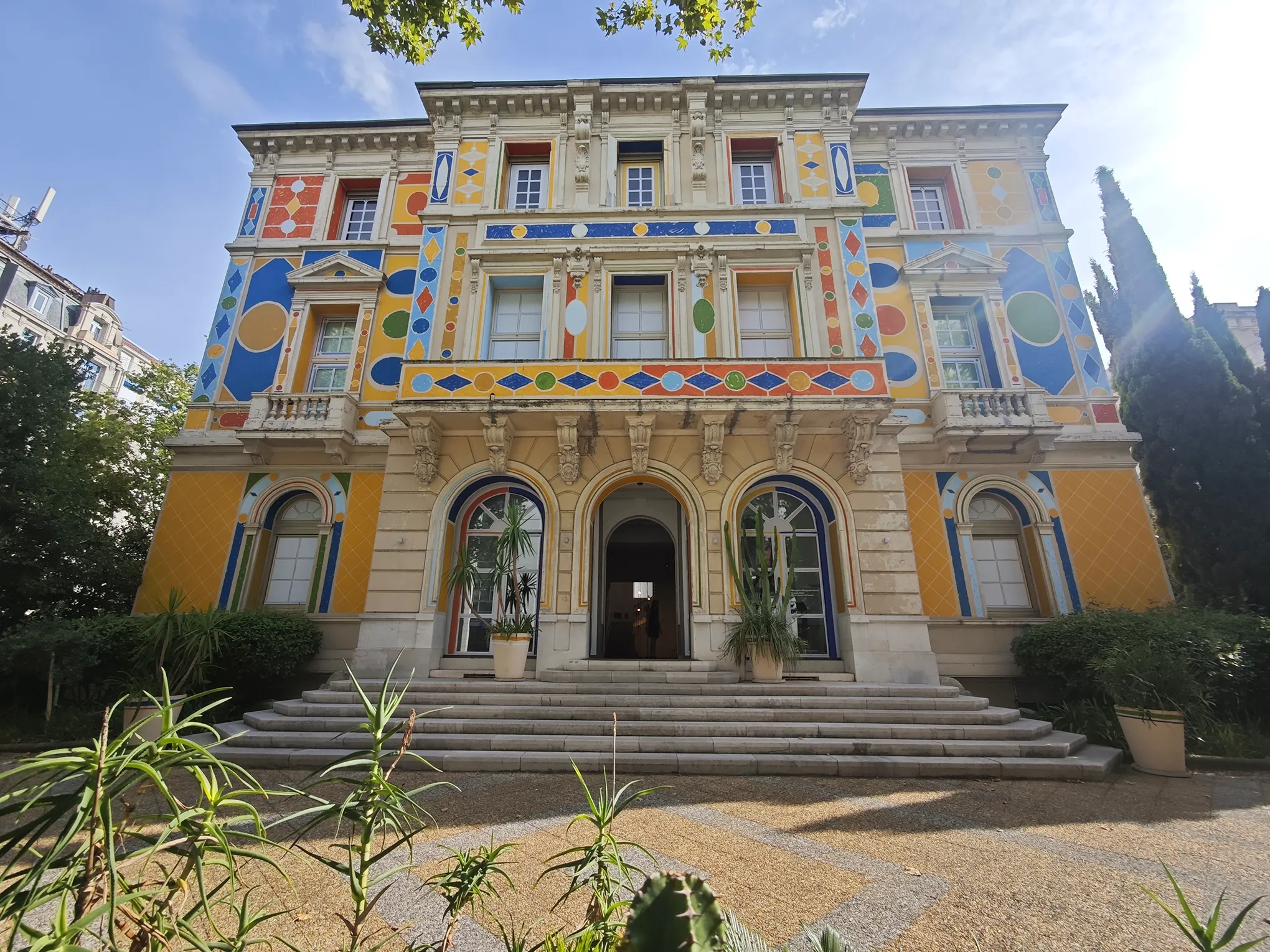
The first thing that stops you on the Boulevard Maréchal Leclerc is the building that isn't the museum. The Hôtel des Arts TPM — a contemporary art space run by the Var metropolitan authority — occupies a 19th-century villa whose facade has been painted entirely in bold geometric patterns of cobalt, yellow, and terracotta. It looks simultaneously ancient and completely contemporary, and it stops people on the pavement. Almost nobody outside Toulon knows it exists. Entry is free, and the exhibition programming is more ambitious than the building's modest profile would suggest.
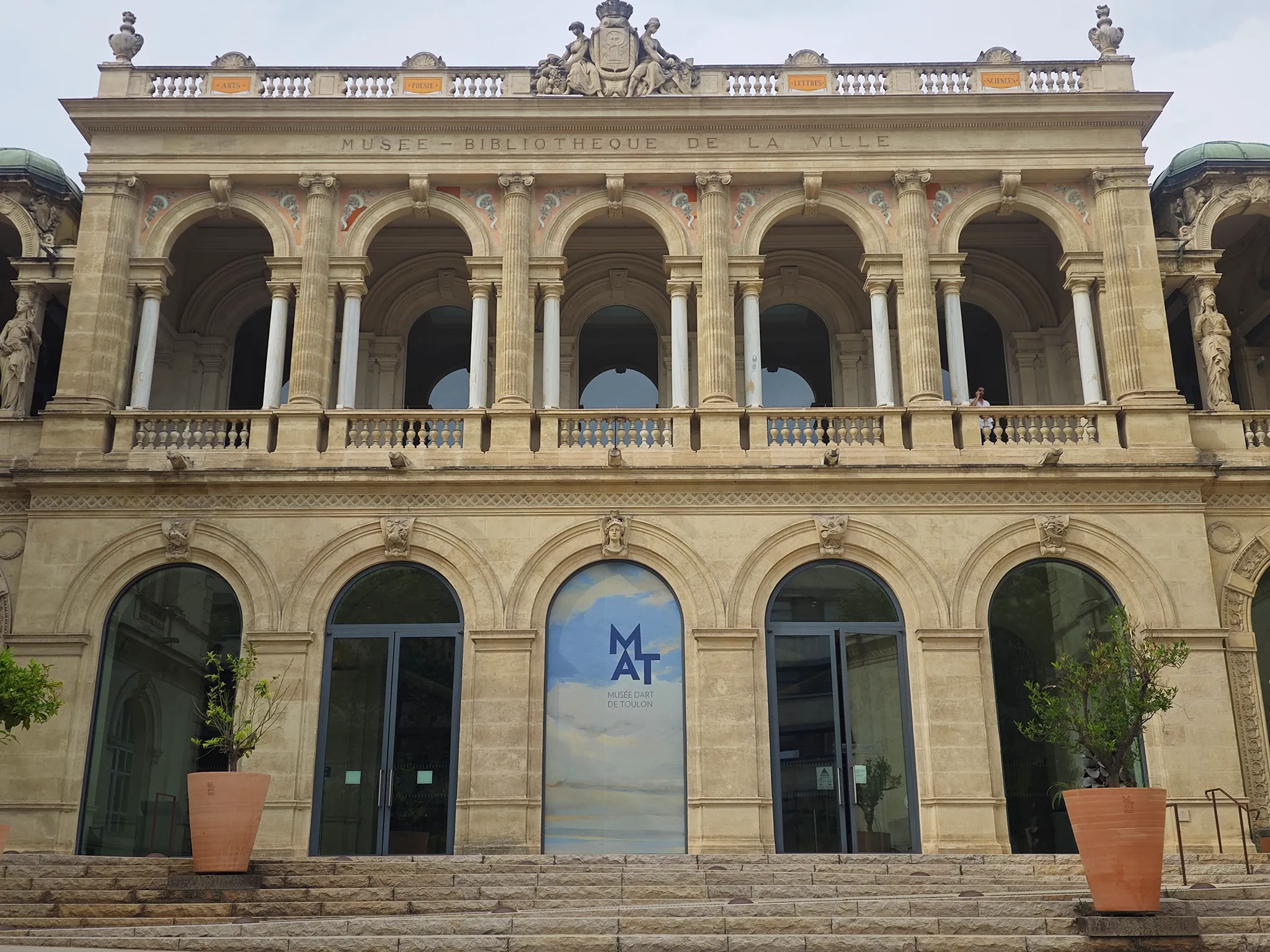
The Musée d'Art de Toulon itself is the quieter presence next door: a handsome stone building with an arcaded courtyard, housing a permanent collection that traces the visual history of Provence through painters who worked the landscape from the inside — not the celebrated names who passed through, but the ones who stayed and understood the light. Entry is also free.
Inside, the library doubles as a cabinet of curiosities: around a hundred ethnographic and archaeological objects from the museum's historic collection, displayed in the dense, unapologetic manner of 19th-century classification. Shells next to instruments next to objects whose purpose is unclear. The kind of room that rewards slow looking, and that has almost entirely disappeared from French provincial museums.
Together, the two spaces make for a cultural morning that would cost considerably more and attract far larger crowds anywhere else along this coast.
Both are on the Boulevard Maréchal Leclerc, within a two-minute walk of each other. Neither requires advance booking.
Toulon at the table
Food is one of the strongest arguments for spending a full day in Toulon rather than rushing through. The city has a serious restaurant culture — partly fueled by its naval history, partly by its position at the crossroads of Provençal and Mediterranean cooking traditions — and the price-to-quality ratio remains far better here than in the more visited towns along the coast.
Les Halles de Toulon — Biltoki
The covered market on Place Vincent Raspail is the place to understand how Toulon actually eats. The Biltoki food hall inside brings together local producers and small kitchens in an informal, convivial setting. Order what looks good. This is not a place for a fixed menu — it's a place to eat like a local.
L'Équerre
Set on a quiet square in the old town, L'Équerre is Toulon's most considered table: creative French cooking with a strong Provençal accent, careful sourcing, and a wine list that takes the regional appellations seriously. Reserve ahead.
Le Bistrot des Canailles
The kind of neighborhood bistrot that Toulon does well and that visitors rarely find without a local tip. Market cooking, natural wines, zero formality. The sort of lunch you remember more than the expensive one.
AOC 41
A wine-focused address that doubles as a small kitchen. The list leans toward independent producers from Provence and beyond, and the food is calibrated to pair rather than compete. A good choice for early evening if your schedule allows.
Tomo Tomo
An unexpected find at the corner of Rue Gimelli and Rue Dumont d'Urville: a Japanese restaurant with genuine precision in a city where you'd be forgiven for not looking for one. Popular with a local crowd, which is always the right indicator.
Le Saint Gabriel
Facing the harbor on the Avenue de la République. The terrace and the view over the rade are both excellent — but the kitchen is serious enough to earn its own recommendation. Good for a long lunch with the ships in the background.
L'Escale
At the Anse Méjean, right on the Sentier des Douaniers. Informal, unhurried, with the sea close enough to hear. The natural stop after a swim in the inlet — or before one.
Milady Mourillon
Set directly on the Anse de la Source at the Mourillon beach. Simple Mediterranean cooking, feet practically in the sand, the kind of afternoon that makes you rearrange your itinerary. One of the best arguments for extending the day east of the center.
A full day in Toulon: one possible sequence
Toulon rewards a loose itinerary more than a rigid one. That said, here's how a well-paced day tends to unfold for visitors arriving by sea.
For cruise passengers with 4 hours rather than a full day: prioritize the Cours Lafayette market, a walk through the old town, and one meal. Skip the mountain — save it for a return visit.
Beyond Toulon: the Var worth discovering
Toulon works well as an anchor for a longer stay in the Var — a region with exceptional variety within a surprisingly compact geography. The destinations below are all within an hour of the port and represent some of the most compelling reasons to extend a trip beyond the city.
For wine, the Bandol appellation is one of Provence's most serious — dominated by Mourvèdre rather than the rosés that have come to define the region's export identity. Domaine Ott, La Fond des Pères, and Domaine Ray-Jane are all worth a visit with an appointment. The tasting experience here is genuinely different from the Saint-Tropez wine trail: smaller, more personal, less performance.
For beaches beyond the Mourillon: Almanarre — a long, wild stretch toward Hyères — and the quieter coves toward Bormes-les-Mimosas. None require any particular effort to reach, only the decision not to stop at the first crowded strip you see.
Visiting Toulon & the Var with Beaurouge
Toulon is a city that rewards those who know where to look — and the Var is a region that rewards those who have someone to guide them past the obvious. At Beaurouge, we design private itineraries that combine cultural depth with practical knowledge: the right timing, the right stops, and the right table waiting at noon.
Whether you're arriving by cruise and want to make the most of your day ashore, or building a longer program in Provence, we'd be glad to put something together.
Toulon — FAQ
Yes — provided you go beyond the immediate port area. The Cours Lafayette market, the old town, and a meal at the Halles Biltoki or Le Bistrot des Canailles can make for an excellent half-day. With a full day, add Mont Faron and the coastal inlets of Cap Brun.
The combination that works best: morning at the Cours Lafayette market and old town, midday at the two free museums on the Boulevard Maréchal Leclerc, afternoon at Mont Faron (road preferred over téléphérique for flexibility), and late afternoon at the Anses de Méjean or the Mourillon beach.
Not consistently. The cable car has a history of closures for maintenance, and hours are limited. If you have access to a car, the road route is more reliable, more flexible, and — with stops at the Pointe de Valbourdin — arguably more rewarding. Always check operating hours before planning your day around it.
Excellent by city beach standards — sandy, with clear water, easy access, and restaurants directly on the shore. They are significantly less crowded than the beaches of Nice or Cannes and have a genuinely local character. The Anse de la Source, where Milady Mourillon is located, is the best stretch.
The most rewarding within an hour of the port: Évenos (perched stone village, almost no tourists), Sanary-sur-Mer (excellent Provençal market on Wednesday), Le Castellet (medieval hilltop village above the Bandol vineyards), and Bandol itself for wine tasting. Hyères and the ferry to Porquerolles is a longer day but one of the great excursions of the Var.
Planning a trip to the Var? Browse our Provence itineraries or reach us via Contact.